Gas Fireplace Won't Light? Five Safe Checks Before You Call for Repair
The first cold night hits Arlington, you flip the switch, and the gas fireplace clicks or does nothing at all. Before you book a repair, here are the checks any homeowner can do safely, the signs that mean stop, and what a free service call from Crownline covers.
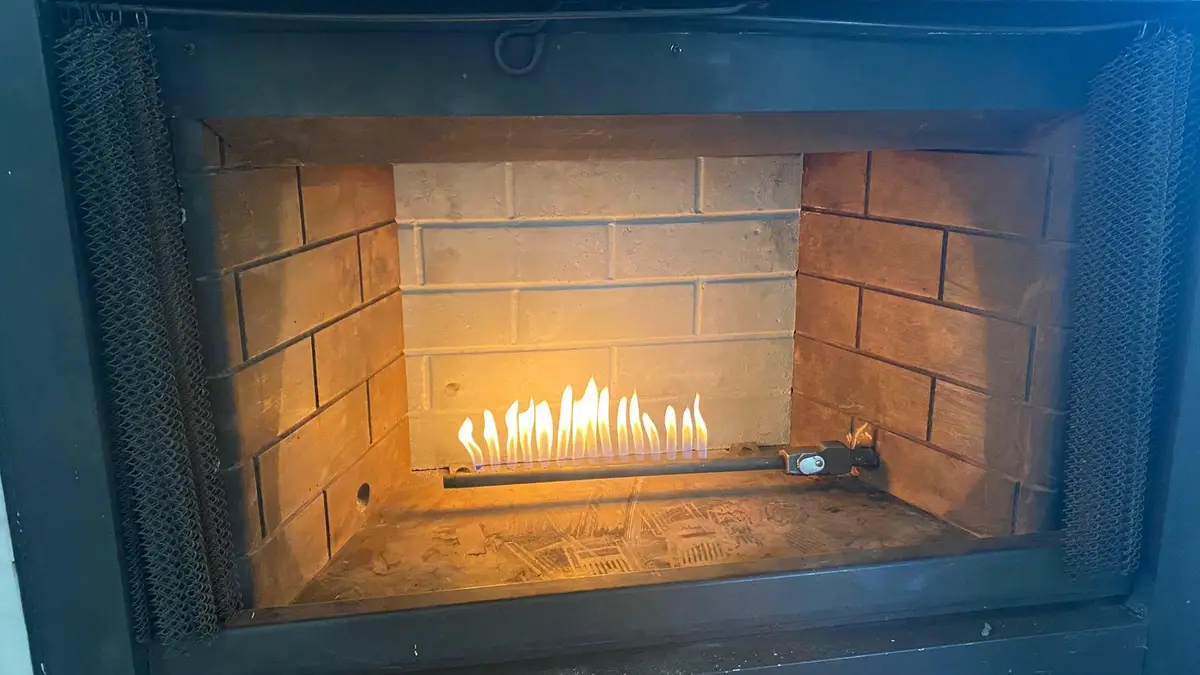
The first real cold front reaches Arlington most years in late October or November. The house drops into the low 60s, you flip the wall switch, and the gas fireplace does nothing. Or it clicks for ten seconds and quits. Or the pilot lights, you let go of the knob, and the flame dies. It sat through eight months of Texas summer, and now, on the one night you want it, it will not light.
Here is the good news: a gas fireplace that won’t light is usually a small problem, and a few of the checks are safe for any homeowner to do. Here is the order to try them, the signs that mean stop, and what happens on a free service call from Crownline Chimney Sweep. If you would rather skip straight to the fix, our gas fireplace repair page explains every part we test.
First, the Smell Test
Before you touch anything, smell the hearth. If you smell gas, stop. Open a window, close the gas valve if you know where it is, leave the room, and call Atmos Energy from outside the house. Gas lines are a plumber’s job under Texas law, and a leak is never a do-it-yourself fix. If there is no gas smell, carry on with the checks below.
Check 1: The Wall Switch, Remote and Batteries
Most gas fireplace calls we take in newer Arlington neighborhoods like Viridian and the homes near Lake Arlington end with a battery. Modern units use a remote or a wall switch that talks to a receiver box under the fireplace. Here is what to try:
- Replace the batteries in the remote and in the receiver. The receiver is usually a small box under the bottom louver or behind the lower panel, and it often takes four AA batteries that die over the summer.
- Flip the wall switch off and on a few times. Painters disconnect these switches more often than you would think.
If the fireplace lights after this, you are done.
Check 2: Is the Pilot Light Out?
Older gas log sets in the 1950s to 1980s brick fireplaces around UTA, Oak Hill and Dalworthington Gardens use a standing pilot: a small flame that burns all the time. Look under the logs for it. If there is no small blue flame, the pilot is out, and the main burner cannot light until it is back.
Relighting a pilot is safe when you follow the steps printed on the rating plate on your unit. The general order:
- Turn the control knob to Off and wait five minutes so any gas clears.
- Turn the knob to Pilot, press it in, and hold.
- Press the igniter button (the click) until the pilot lights. After a summer off, air in the line can take a minute to clear, so give it several tries.
- Keep holding the knob for 30 to 60 seconds, then release.
- Turn the knob to On and flip the switch.
If the pilot lights but dies the moment you release the knob, the thermocouple is worn. That is the most common gas fireplace repair in Arlington, and it is a quick one with the right part.
Check 3: Is the Gas Valve Open?
Every gas fireplace has a shutoff valve, usually a key valve in the floor or wall beside the hearth or a lever valve under the unit. A valve handle that sits across the pipe is closed. A handle in line with the pipe is open. A remodeler or a previous owner may have closed it. Open it, wait a minute, and try the pilot again. Only touch the fireplace valve. Leave the supply line and the meter alone.
Check 4: Is the Pilot Flame Weak or Yellow?
If the pilot lights but the burner never comes on, look at the pilot flame. It should be strong and blue and wrap around the tip of the thermocouple and thermopile. A small, lazy yellow flame means the pilot assembly is clogged with dust or a spider web. A summer’s worth of spider web in the pilot orifice is one of the most common things we clean out in Arlington. Cleaning it needs the right tools, so this is a stop-and-call point.
Check 5: Look at the Burner and Logs
If the pilot is strong and the burner lights only on one side, or the flame is sooty and yellow, the burner ports are clogged or the logs have been moved. Logs that sit on the burner ports block the flame. Take a photo before you move anything and set the logs back exactly as the manual shows. If the burner is rusty or the ports are blocked, leave it for the service call.
When to Stop and Call
Stop troubleshooting and call when:
- You smell gas at any point (call Atmos first, from outside).
- The igniter clicks for more than a minute and never lights.
- The pilot will not light after several tries, or dies when you release the knob.
- The pilot flame is small, yellow or sooty.
- The glass is cracked, fogged on the inside, or sooted black.
- The unit lights, then shuts itself off after a few minutes.
Each of those points to a part, and testing it means reading millivolts at the valve and checking the vent. That is where a service call pays for itself. Carbon monoxide is the other reason to stop. A gas fireplace that burns yellow or soots the glass is not burning cleanly, and the NFPA’s carbon monoxide safety guidance calls for a CO alarm on every level of the home and outside each sleeping area. We take a CO reading at the hearth on every visit.
What a Free Gas Fireplace Service Call Covers
Crownline’s gas fireplace service call in Arlington is free. On the visit, our crew:
- Tests the full ignition chain: gas at the fireplace valve, pilot flame, thermocouple and thermopile readings, igniter spark, wall switch, receiver and remote.
- Cleans the pilot assembly and checks the burner ports and log placement.
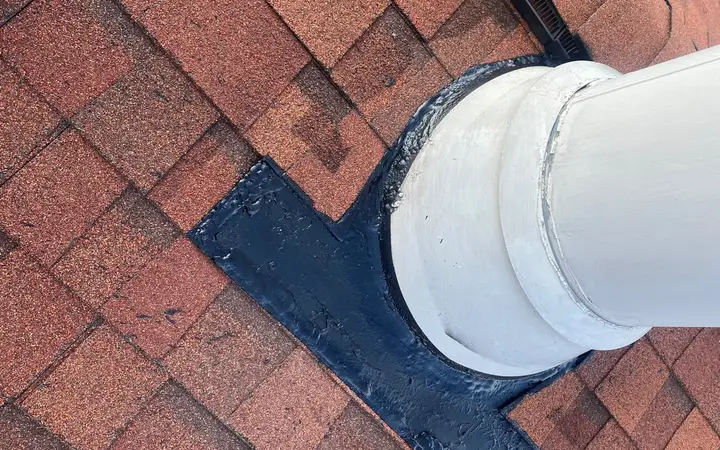
- Looks at the glass gasket, the firebox and the vent cap outside for nests, rust and blockages.
- Takes a carbon monoxide reading with the unit running.
- Shows you the part that failed, with a photo, and gives you the repair price in writing.
Most gas fireplace repairs in Arlington are finished on the first visit because the common parts ride on the truck. If the gas log set itself has crumbled or rusted, that is a separate conversation, and our gas log installation page covers vented and vent-free options. Seniors, veterans and first responders get 10% off, one discount per job.
A Fall Service Prevents the Cold-Night Call
Almost every “gas fireplace won’t light” call we take in November could have been a ten-minute cleaning in September. A yearly service cleans the pilot and burner, tests the thermocouple and thermopile, checks the gasket and the vent, and tells you which parts are getting weak so you replace them on your schedule. It is the cheapest part of our fireplace services in Arlington, and if the fireplace is your backup heating on cold nights, it keeps the first front from catching you with a cold hearth.
Crownline Chimney Sweep is based at 700 Highlander Blvd near the Parks Mall and I-20, with a crew that has worked on Arlington fireplaces for more than 20 years. We are insured and bonded, and the price is in writing before any part is replaced.
Gas fireplace still clicking with no flame? Call Crownline at (817) 505-4222 for a free service call, 7 AM to 10 PM, seven days a week.
Why Arlington Homeowners Trust Crownline Chimney Sweep
Crownline Chimney Sweep is a chimney and fireplace company based in Arlington, TX.
- Insured & Bonded: Your home is covered while we work
- Locally Owned: Based in Arlington, TX, not a chain
- 20+ Years: More than 20 years working on Arlington homes
- Free Repair Estimates: Written price before any repair, and 10% off for seniors, veterans and first responders
Read more about our fireplace services in Arlington or about our team.