
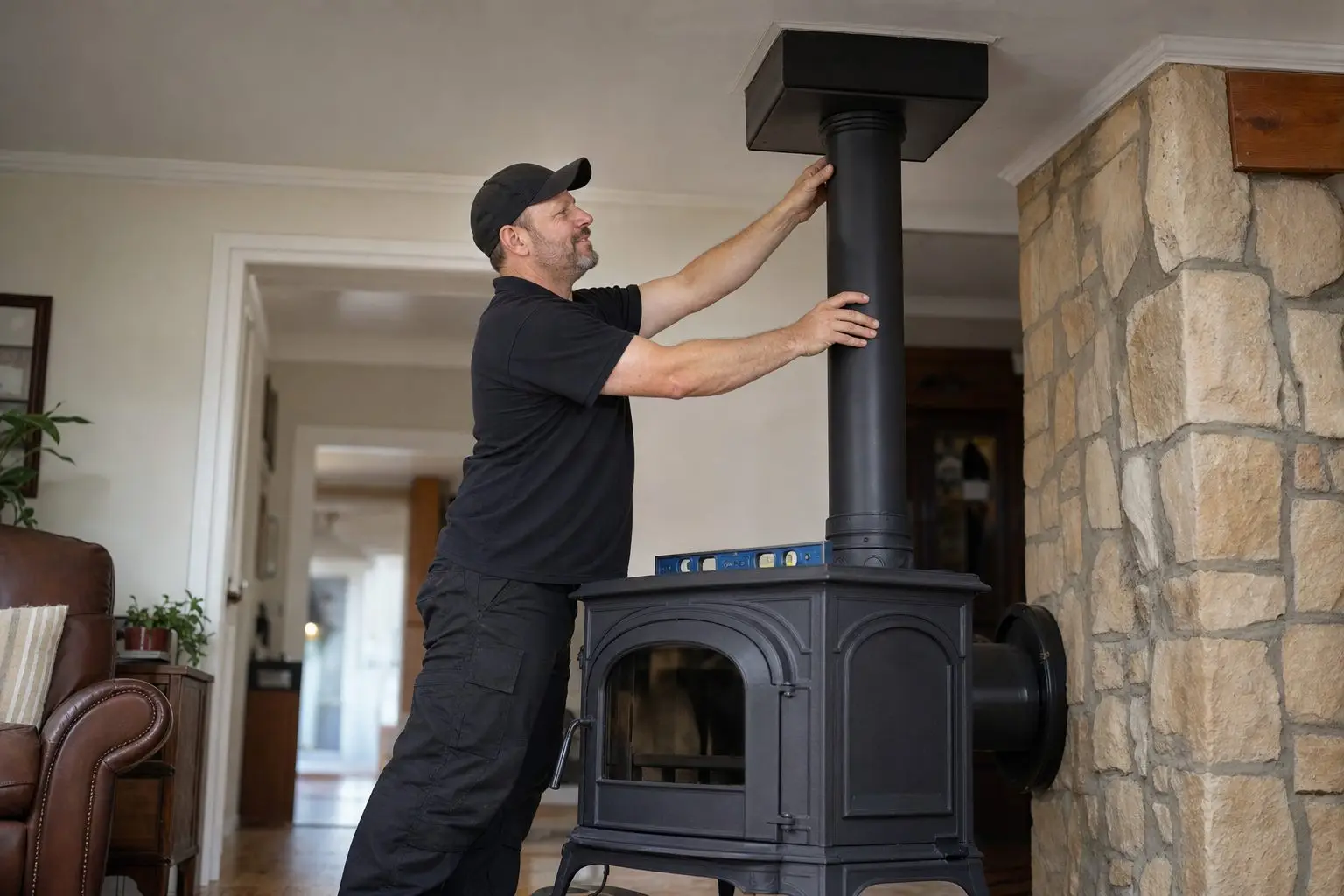
Wood Stove Installation in Arlington, TX From a Crew That Sizes the Venting First
The call usually starts with a room, not a stove. A den that stays cold all winter in a 1970s ranch house in Dalworthington Gardens. A workshop out back in South Arlington near Lake Arlington. A new build in Viridian with a gas fireplace that looks nice and heats nothing. The homeowner has priced a stove online and wants to know what it takes to put it in.
Crownline Chimney Sweep installs wood stoves and pellet stoves in Arlington, TX, including the liner or chimney pipe, the hearth pad and the clearances, with a free in-home estimate and a written price before any work. Our crew has worked on Arlington chimneys and fireplaces for more than 20 years, we are insured and bonded, and we size the venting to the stove instead of hoping the old flue will do.
This page covers what local wood stove installation in Arlington TX includes, how to choose between wood and pellet, what the code requires for ventilation and clearances, and what moves the price. It is one of the fireplace and chimney services Crownline offers in the Arlington area; for a fireplace installation in Arlington, whether a new fireplace or an insert, or for fireplace repair, see those pages.
What a Wood Stove Installation Includes
A stove is only as safe as the venting under it, over it and behind it. Here is what Crownline does on every wood stove installation in Arlington.
- Free in-home estimate. We measure the room, the floor, the wall or chimney route, and the roof height. You get a written price with the stove, the liner or pipe, the hearth pad and the labor on separate lines.
- Stove selection. If you have not bought one yet, we help you size it. A stove that is too big for the room gets run with the air choked down, which makes creosote. Too small and it never catches up on a January night.
- Venting. Into an existing masonry chimney, we run a stainless steel liner sized to the stove outlet, usually 6 inches, and seal it top and bottom. On a wall with no chimney, we run Class A insulated chimney pipe through the ceiling and roof, or out the wall and up, with the support box, flashing, storm collar and cap.
- Clearances and hearth. We set the stove to the distances on its label and lay a non-combustible hearth pad that extends in front of and beside the stove by the amount the listing calls for.
- Stovepipe and connector. Single-wall or double-wall stovepipe from the stove to the chimney, joined crimp-end down so creosote drips back into the stove, not onto the floor.
- Final installation check, first fire and walk-through. We light it, watch the draft, check every joint of the ventilation, and show you how to run the air control and when to reload.
You get photos of the finished venting, which your insurance agent will likely ask for.
Wood Stove or Pellet Stove: Which One for an Arlington Home
Both heat a room better than an open fireplace. They differ in fuel, power and venting.
| Wood stove | Pellet stove | |
|---|---|---|
| Fuel | Cordwood, dry and split | 40 lb bags of compressed wood pellets |
| Electricity | None needed | Needs power for the auger, igniter and fan |
| Venting | 6-inch liner or Class A chimney pipe, must rise per the 3-2-10 rule | 3 or 4-inch pellet vent, can run out a wall |
| Control | Manual air control | Thermostat, set and forget |
| Yearly care | Chimney sweep, gasket check | Burn pot, ash pan and vent cleaning |
| Best for | Homes with an existing chimney, power outages, a woodpile | Rooms without a chimney, easy daily use |
An efficient wood stove heats a den with a fraction of the wood a traditional wood-burning fireplace burns, because the fireplace sends most of its heat up the chimney. Arlington winters are short, so many homeowners pick the stove by the room. A den with a brick chimney in Old Arlington is a natural wood stove. A bonus room or a garage office in Southwest Arlington with no chimney is often a pellet stove with a short wall vent. We install both, and we will tell you which one fits before you buy anything.
EPA-Certified Stoves and Why They Matter in Texas
Every new wood stove sold in the United States since 2020 has to meet the EPA’s limit of 2.0 grams of smoke per hour, or 2.5 for stoves tested with cordwood. The EPA’s Burn Wise guide to choosing a wood-burning stove explains the certification, and the practical result is simple: a certified stove burns less wood for the same heat and leaves far less creosote in the flue than the 1980s stoves still sitting in some Arlington garages.
That matters here for two reasons. North Texas firewood is often oak or pecan sold “seasoned” that is not dry, and a certified stove with a secondary burn handles marginal wood better. And a short heating season means the stove gets used hard for a few weeks, then sits, so the less creosote the wood-burning unit makes per fire, the fewer sweeps you pay for. Every new stove we install is EPA-certified, because every new stove sold is.
Clearances, Hearth Pads and the 3-2-10 Rule
Three numbers decide whether a wood stove installation is safe, and all three come from the stove’s listing and from the chimney standard, NFPA 211.
- Wall clearance. A listed stove states its distance to combustible walls on the label, often 6 to 18 inches depending on the model and whether it has a rear heat shield. An unlisted stove needs 36 inches.
- Hearth pad. The floor under and around the stove must be non-combustible, extending in front of the loading door, commonly 16 inches, and past each side. Carpet, laminate and wood floors need a pad.
- Chimney height. The 3-2-10 rule: the chimney must end at least 3 feet above where it exits the roof and at least 2 feet above anything within 10 feet of it. On a low-pitched ranch roof in Pantego that means a taller pipe, braced, than the homeowner expected.
A fourth number is the pipe size. A modern stove with a 6-inch outlet will not draw well through a 12-by-12 clay tile flue in a 1960s brick chimney; the flue is too big and too cold. That is why a chimney liner installation sized to the stove is part of almost every stove-into-chimney job in Arlington.
Installing a Wood Stove Into an Existing Fireplace
Many homes in the Arlington area already have a traditional wood-burning fireplace, and a fireplace conversion costs less than adding a new chimney. There are two ways to do it.
A freestanding stove on the hearth sits in front of the fireplace opening. Its stovepipe goes up into the old firebox, through a block-off plate at the damper, and into a stainless liner that runs the full height of the flue.
An efficient wood-burning fireplace insert slides into the firebox itself, with a surround panel that closes the opening and a liner up the flue. Installing a fireplace insert keeps the fireplace look, and it works well in the 1950s to 1980s masonry fireplaces across Old Arlington, UTA and Dalworthington Gardens. If you are weighing an insert against a stove, our fireplace and insert installation page covers inserts in detail.
Either way, we inspect the chimney first. A cracked crown, a split clay tile or a gap in the smoke chamber gets fixed before a liner goes in, because a liner does not cure a chimney that leaks water.
What Moves the Price of a Wood Stove Installation
Crownline does not publish a flat price for wood stove installation because the venting route decides most of it. The written estimate is free, and these are the lines on it:
- The stove. Usually the biggest item. We install a stove you bought or help you choose one before you buy.
- Venting. A stainless liner into an existing chimney is the lower-cost route. A new Class A chimney through the ceiling and roof costs more in parts and labor, and a two-story run costs more than a one-story run.
- Hearth pad and wall protection. A listed hearth board is the simplest; a tile hearth built on site costs more.
- Chimney repairs found on inspection. Crown, cap or tile work needed before the liner goes in, quoted separately.
- Permit. Most North Texas cities require a mechanical permit for a new solid-fuel appliance. We tell you what Arlington requires when we quote the job.
What is not on the invoice: anything you did not approve in writing first. Estimates on installations are free, seniors and veterans and first responders get 10% off, and we match written quotes from an insured company for the same work.
After the Install: Keeping a Wood Stove Safe
A wood stove makes creosote faster than an open fireplace because it runs with the air closed down. Plan on a wood stove cleaning and chimney cleaning once a year, with a look at the stovepipe mid-season in a heavy-use winter. Burn dry wood only, 20 percent moisture or less; a $20 moisture meter pays for itself in the first cord. Keep the door gasket tight and the glass clean, and have the chimney cap checked after a hailstorm, since Tarrant County hail dents caps and spark screens.
Why Arlington Homeowners Call Crownline for Wood Stove Installation
If you searched for stove installation near Arlington or installers near Arlington, most of what comes up is either a fireplace showroom from across the DFW metroplex or a handyman installer who has never run a Class A chimney. Crownline Chimney Sweep is a local North Texas chimney company based at 700 Highlander Blvd near the Parks Mall and I-20, with a crew that has spent more than 20 years inside Arlington chimneys. Our wood stove installation services are insured and bonded, quoted in writing before any work, and photographed at the finished venting, and every stove we install is installed and maintained by the same crew, along with the gas log sets and inserts we put in across Arlington. That is why we say Crownline is the best chimney company in Arlington, and it is a claim you can check line by line. We install stoves across Arlington and the surrounding areas: Pantego, Dalworthington Gardens, Kennedale and Mansfield. See everything we do on the fireplace side on our fireplace services in Arlington page.
The frequently asked questions below cover cost, the 3-2-10 rule, insurance, DIY and how long the job takes. Call (817) 505-4222, open every day 7 AM to 10 PM, or request your free in-home estimate with the form below.