
A Piece of Clay Tile in the Firebox Is Not a Small Thing
A homeowner near UTA cleans out the firebox after the first cold front in November and finds a chunk of orange clay the size of a hand. That piece came from the flue liner, the set of stacked clay tiles that line the inside of a brick chimney. When one tile cracks and drops, the joints around it are usually gone too, and the flue is letting heat and gases reach the brick. That is the point where chimney liner installation in Arlington, TX becomes a safety repair, not an upgrade.
Crownline Chimney Sweep handles chimney liner installation in Arlington, TX. We inspect the flue with a camera, show you the photos, and give you a free written estimate for a stainless steel liner sized to your fireplace, insert, stove or gas appliance. The price is in writing before we start.
This page covers when a chimney needs a new liner, what the installation includes, what liners cost in DFW, and the questions Arlington homeowners ask most.
What a Chimney Liner Does
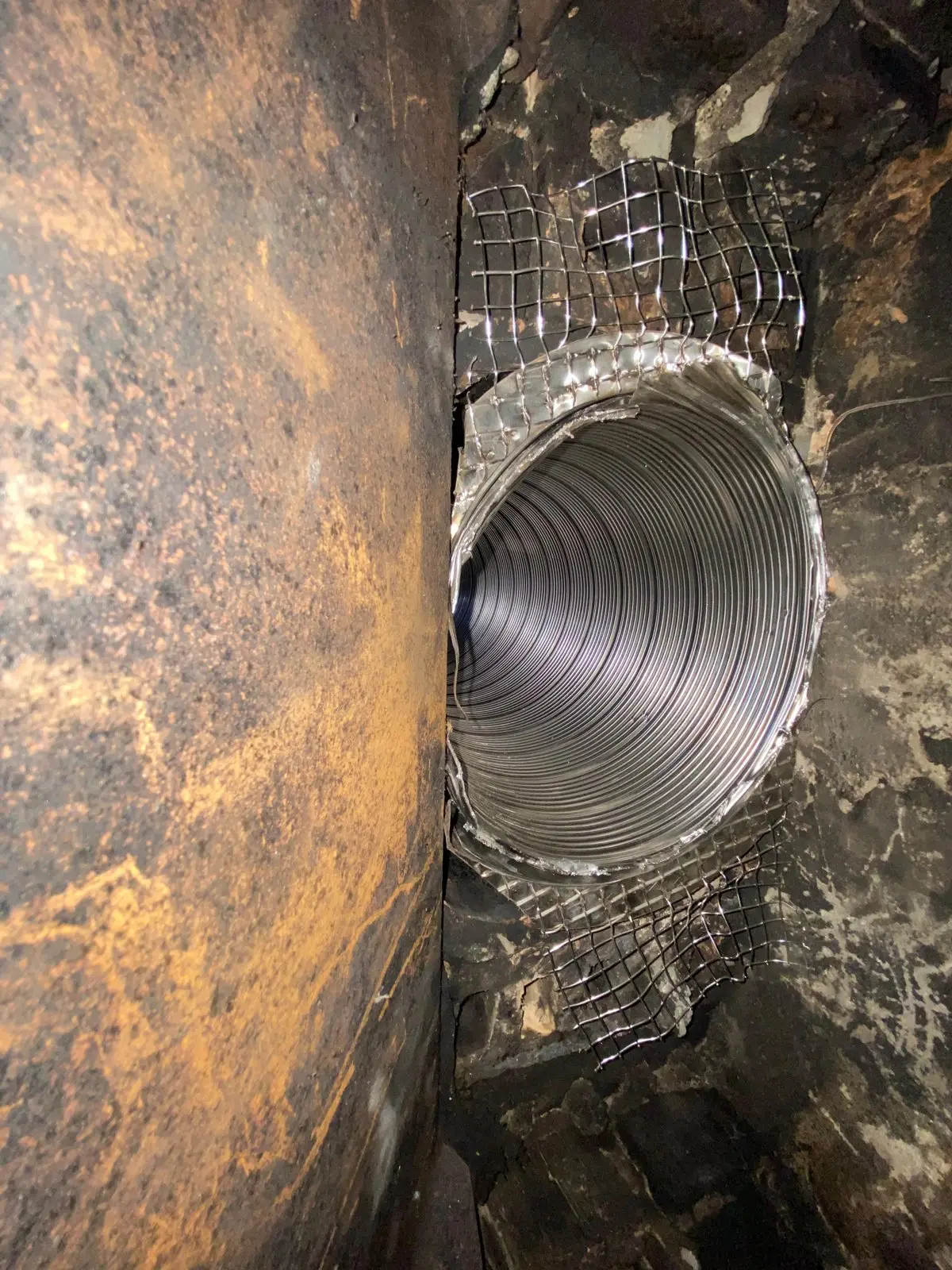
The liner is the inner tube of the chimney. Its job is to carry smoke and gases out of the house without letting heat or moisture reach the masonry and the wood framing around it. A sound liner also keeps the flue the right size for the appliance below it, which is what makes a fireplace draft instead of smoke.
Most Arlington brick chimneys built from the 1950s through the 1980s have clay tile liners. Clay works until it cracks. Texas weather affects clay tile more than most people expect: North Texas clay soil moves the chimney a little every year, summer heat expands the tiles, and a single chimney fire can split them along their length. The local climate and construction of the 1960s brick chimney are a hard combination for a clay flue. Once the tiles crack, the flue has to be relined.
Factory-built fireplaces in the newer Southwest Arlington homes have a metal pipe instead of tiles. Those are not relined; a damaged pipe section is replaced. This page is about masonry chimneys.
When Your Arlington Chimney Needs a New Liner
Crownline recommends a chimney liner in five situations:
- Cracked or missing clay tiles. Found by camera during a Level 2 chimney inspection, after a chimney fire, or when tile pieces show up in the firebox.
- Missing mortar between tiles. The joints wash out over decades. Gaps let flue gases and creosote reach the brick.
- A wood-burning insert or stove. Manufacturers require a full stainless liner from the appliance to the top of the chimney, sized to its outlet.
- A gas appliance in an old flue. A gas furnace, water heater or some gas fireplaces vent cooler, wetter exhaust that eats clay and mortar. Many need a liner.
- A flue that is the wrong size. An oversized flue makes a fireplace smoke; a liner brings it to the size the fireplace needs.
If you are buying a 1960s or 1970s brick home in Central Arlington, Dalworthington Gardens or East Arlington near the stadiums, have the flue scanned before closing. A missing liner is one of the most expensive surprises in an older house, and it is one a Level 1 look from the firebox cannot see.
Types of Chimney Liners We Install
Flexible stainless steel. The most common liner we install in Arlington. It snakes down flues with offsets, comes in sizes to match every fireplace and insert, and handles wood, gas and pellet appliances. 316 stainless is the usual choice for wood and most gas appliances, in the gauge the appliance manufacturer calls for.
Rigid stainless steel. For straight flues, a rigid liner has a smoother inside wall, which drafts better and is easier to sweep. It costs a bit more per foot and does not bend.
Insulated liners. Wrapping the liner in insulation keeps flue gases hot, which cuts creosote and improves draft. Inserts and stoves usually require it, and chimneys on an outside wall benefit from it.
Cast-in-place. A cement-like mix is pumped around a form inside the flue to create a new, smooth liner that also strengthens cracked masonry. We mention it because some Arlington chimneys with heavy tile damage are candidates. Stainless steel is the right fit for most homes, and we tell you which one your flue needs after the camera inspection.
Aluminum liners exist, but they are only for certain gas appliances and they do not hold up in a wood-burning flue. We do not put aluminum in a fireplace.
What Our Chimney Liner Installation Includes
Every liner job in Arlington follows the same steps, and you get photos of each one.
- Camera inspection. We run a camera the full height of the flue and show you the cracked tiles, the missing joints and anything else we find.
- Measure and size. Height, flue dimensions, offsets and the outlet size of the fireplace, insert, stove or gas appliance set the liner size and type.
- Written estimate. One itemized price that lists the liner, insulation, cap and connection. Free, and good until you decide.
- Prep the flue. Loose tile, debris and heavy creosote come out. If the flue has glazed creosote, we handle creosote removal first so the liner goes into a clean flue.
- Install the liner. The liner goes down from the top, insulated if required, and is connected at the bottom to the fireplace, the insert or the appliance flue pipe.
- Top it off. A stainless top plate, storm collar and a new chimney cap seal the top and keep rain and animals out of the new liner.
- Test and photograph. We check the draft, then send you photos of the finished liner from top and bottom.
Most single-flue liners are done in one day. A two-flue chimney or a job with heavy tile removal can take two.
What Chimney Liner Installation Costs in Arlington
National cost guides put a stainless steel chimney liner at $1,800 to $4,000 installed, with most homeowners paying around $2,500 (Fixr); HomeAdvisor lists $2,500 to $5,000. DFW prices land in the same range. No Arlington chimney company we found publishes a liner price, and a homeowner on Reddit asked whether a $2,400 liner quote was reasonable; for a standard flue, it is.
Here is what moves the price on an Arlington home:
| Factor | Lower cost | Higher cost |
|---|---|---|
| Chimney height | One-story ranch | Two-story with a tall stack |
| Liner type | Flexible, uninsulated | Rigid or insulated |
| Flue condition | Clean, straight | Heavy tile removal or offsets |
| Appliance | Open fireplace | Insert or stove with a tight connection |
| Number of flues | One | Two (fireplace plus furnace) |
| Top of chimney | Sound crown | Crown repair needed first |
Crownline does not quote a liner over the phone. We look at the flue with a camera, then put the price in writing. Estimates are free, seniors, veterans and first responders get 10% off, and we match written quotes from an insured company for the same work. One discount per job.
Why Arlington Homeowners Choose Crownline for Chimney Liners
Crownline Chimney Sweep is a local Arlington company at 700 Highlander Blvd near the Parks Mall and I-20. Our crew has worked on Arlington chimneys for more than 20 years and has relined a lot of the 1950s to 1980s brick flues around UTA, Fielder Park, Dalworthington Gardens and East Arlington. We are insured and bonded.
What that experience means for your liner:
- We size the liner to the fireplace type and the appliance, not to whatever is on the truck. An oversized liner smokes; an undersized one starves the fire. The installer measures twice.
- A correctly sized, insulated liner protects your home: it keeps heat off the framing and lets the fireplace vent safely and efficiently, which is what the safety standards in NFPA 211 and the appliance manual are written for.
- We show you the camera video before we recommend anything. If the tiles are sound, we say so and you do not buy a liner you do not need.
- The price is in writing, with the liner type, gauge, insulation and cap listed.
- The liner comes with a new cap and top plate, so the job is finished at the top, not just inside.
- We burn clean. The EPA Burn Wise program is a good primer on why a properly sized, insulated flue and dry wood cut creosote and smoke, and it is the standard we install to.
That is why we say Crownline is the best chimney company in Arlington for this kind of work: a local crew with 20 years in these exact chimneys, a written price, and photos that prove it.
Where We Install Chimney Liners Near Arlington
Crownline installs liners across Arlington TX: ZIP codes 76001, 76006, 76010, 76012, 76013, 76016, 76017 and 76018 and the surrounding zip codes, from the older brick homes in Central and East Arlington near AT&T Stadium to South Arlington, North Arlington near River Legacy Park, near Lake Arlington, Viridian, Pantego and Dalworthington Gardens, and the Fort Worth side of DFW. Ask Arlington locals with a 1960s brick fireplace and many have already had the flue relined.
A liner is also the first step in a fireplace installation in Arlington: every wood-burning fireplace insert and most brand new fireplace units need a liner sized to the appliance, installed to the manufacturer specs and local code, including Arlington’s local building codes for a wood-burning fireplace installation. If you are installing a fireplace or a stove, the liner is part of our fireplace installation process, and the written estimate covers both. Liners also come up in fireplace repair when a camera finds cracked tiles behind a firebox problem, and in fireplace cleaning when the sweep finds glazed creosote that the old clay flue cannot shed.
Liner installation is one of the chimney repair services Crownline offers in Arlington, TX. A yearly chimney cleaning keeps the new liner clear, and the fall sweep visit is the right time to check it. If you are also planning a new insert or stove, see our fireplace and insert installation page; the liner is part of that job. Call (817) 505-4222 or request a free estimate below, and we will scan the flue before you light another fire in it.
Below are the frequently asked questions Arlington homeowners send us about chimney liners. If yours is not here, call and a real person at our Arlington office will answer it.