
Arlington Animal Removal From Chimneys by a Crew That Caps It Afterward
The first call usually comes in April. A homeowner in a 1960s brick house near UTA hears scratching behind the fireplace at night, then chattering, then a smell. The flue has never had a cap, a raccoon has found the smoke shelf behind the damper, and she has kits. By June the calls change to birds: chimney swifts chattering at dusk in an uncapped flue in Dalworthington Gardens. By October it is squirrels falling into flues all over South Arlington as the leaves drop.
Crownline Chimney Sweep provides animal removal from chimneys in Arlington, TX: raccoons, squirrels, birds and nests removed humanely, the flue cleaned, and a stainless steel cap installed so it does not happen again, with a free estimate and a written price before any work. Our crew has worked on Arlington chimneys for more than 20 years, and we are insured and bonded.
One thing we say up front, because other companies do not: if the bird in your chimney is a chimney swift, it is protected by federal law, and nobody can remove the nest until the young have flown. We tell you that on the phone, not after a service call. And this is humane wildlife removal from chimneys only: for a rat or mouse in the attic, a rodent infestation in the walls, or bats, call one of the wildlife control services that handle wildlife control in Arlington, and we will say so if that is what the camera shows.
Which Animals End Up in Arlington Chimneys
An uncapped chimney is a hollow tree to a wild animal, and Arlington has plenty of urban wildlife and plenty of old chimneys. The wild animals we remove from chimneys most often:
- Raccoons. A mother raccoon climbs down the flue in late winter or spring and raises her kits on the smoke shelf, the ledge just above the damper. You hear scratching and chirping at night and smell droppings in the firebox.
- Chimney swifts. Small, dark birds that arrive in North Texas in spring, glue a half-cup nest of twigs to the inside of the flue, and raise their young from May through August. The sound is a loud chattering at feeding time.
- Squirrels. Fox squirrels and gray squirrels fall into uncapped flues and cannot climb the slick clay tile back out. Frantic scratching in the firebox, often in fall.
- Other birds. Starlings, sparrows and doves nest on the smoke shelf or on top of a closed damper and pack the flue with grass and twigs.
- The occasional opossum, skunk or snake, usually in a chimney on a wooded lot near Lake Arlington or the River Legacy area.
- Bats. Rare in a flue, but it happens in older masonry chimneys. Bats are protected in Texas too, so we tell you exactly what we found and help you get the right wildlife service involved before anything is sealed.
The camera tells us which one it is and where it sits. That matters, because each animal comes out differently.
Chimney Swifts Are Protected: What That Means for You
Chimney swifts are protected under the federal Migratory Bird Treaty Act, administered by the U.S. Fish and Wildlife Service. That protection covers the birds, their eggs and their active nests. Removing an active chimney swift nest is a federal offense, for the homeowner and for any company that does it.
Here is how Crownline handles a swift call in Arlington, honestly:
- We confirm it is swifts. The timing (May to August), the chattering at dusk and the camera view of a twig nest glued to the flue wall are the giveaways.
- We tell you to keep the damper closed and wait. The nesting cycle is short: the young fledge about a month after hatching, and the whole family leaves the flue by late summer.
- In the fall, we come back, clear the old nest and droppings, sweep the flue, and install a screened stainless cap. Swifts come back to the same chimney every year, so the cap is the fix.
Companies that offer to remove the birds in June are either mistaken about the species or willing to break the law on your roof. We are neither.
How Humane Wildlife Removal From a Chimney Works
Trapping a critter inside a flue is the last choice, not the first. The humane method for each animal:
Raccoons. We open the top of the chimney and make the flue a bad place to raise kits: light, noise and, when needed, a one-way door at the top that lets her leave and not return. The mother moves her kits herself, usually within a night or two. If the kits are small and she has left them, we remove them by hand from the smoke shelf and reunite them outside near the chimney so she can collect them. Then the shelf is cleared, the flue swept and the cap goes on.
Squirrels. A squirrel in the firebox or behind the damper is caught by hand or with a net at the damper opening and released outside. We then check the smoke shelf for a nest and sweep the flue.
Birds other than swifts. Nests on the smoke shelf or the damper are cleared once we confirm they are not an active, protected nest, and the flue is swept.
Dead animals. An animal that did not make it out is retrieved from the firebox side or, if it is wedged up the flue, from the top with rods and a retrieval tool. That section of the flue is cleaned and sanitized, and the chimney is capped.
Every removal ends the same way: nest, droppings and debris cleared, flue brushed, damper checked, photos of the clean flue and the new cap.
Why Every Animal Removal Ends With a Chimney Cap
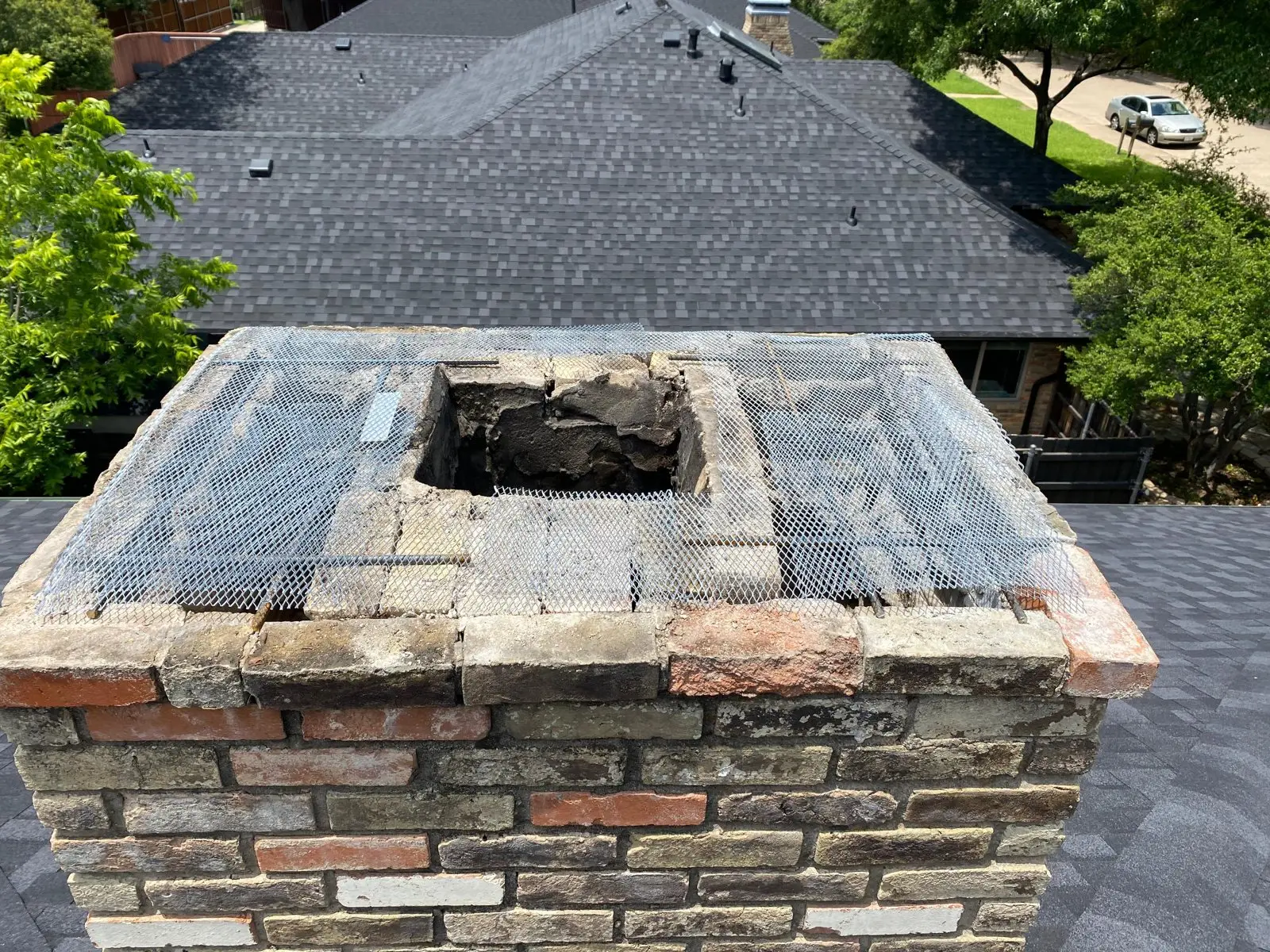
A chimney cap is a stainless steel hood with a mesh screen that bolts to the top of the flue. It keeps animals out, keeps rain and leaves out, and keeps sparks in. Most of the chimneys we pull animals from in Arlington have never had one, or had a cheap galvanized cap that rusted off years ago.
A screened cap is an exclusion cap: it closes the one entry point every chimney animal uses to prevent re-entry for good, and it is the only way to prevent animals from coming back. Crownline installs a screened stainless cap as part of every animal removal, sized to the flue, as a new cap, a cap replacement or an upgrade from a rusted galvanized cap to stainless. On the 1950s to 1980s masonry chimneys around Old Arlington, UTA and Pantego that means a single-flue or multi-flue cap bolted to the clay tile or the crown. On the factory-built fireplaces across Southwest Arlington it means a cap matched to the metal flue pipe, and often a check of the chase cover around it. If you want to compare cap types and prices before the removal, see our chimney cap installation page. A cap is also the cheapest chimney repair there is, and it prevents the whole problem on this page. Two other prevention strategies cost little: trimming branches that overhang the roof, since raccoons and squirrels use them as a bridge to the chimney, and having a rusted chase cover replaced before squirrels chew the gap wider, because nuisance animals find every one of your property’s entry points.
What Moves the Price of Animal Removal
Crownline quotes animal removal after a free look, in writing, before any work. The things that set the price:
| Situation | What it means |
|---|---|
| Bird nest on the smoke shelf, flue otherwise clear | Clear, sweep, cap: the smallest job |
| Raccoon with kits behind the damper | Humane eviction over a night or two, then clear, sweep, cap |
| Squirrel loose in the firebox | Same-visit removal, nest check, sweep, cap |
| Dead animal wedged in the flue | Retrieval from the top, flue section sanitized, cap |
| Heavy droppings or years of nests | More cleaning time; may be paired with a chimney sweep |
| Chimney swifts, active nest | No removal until fall; cap and cleaning booked for after they leave |
With the cap on, animal removal is a one-time job. Without it, the same chimney gets a new tenant every spring.
Seniors, veterans and first responders get 10% off, and we match written quotes from an insured company for the same work. One discount per job.
What to Do Right Now If Something Is in Your Chimney
Keep the damper closed. If the damper will not close, which is common on older Arlington fireplaces, close the glass doors or tape a sheet of cardboard across the firebox opening so the animal cannot come into the room. Do not light a fire. Smoke does not drive a raccoon out; it kills the kits and leaves you with a worse problem. Do not reach up behind the damper. Call, tell us what you hear and when, and we will tell you on the phone whether it sounds like swifts, a raccoon or a squirrel, and what the next step is.
Why Arlington Homeowners Call a Chimney Company for a Chimney Animal
A pest control company treats the chimney as a hole to seal. A chimney company knows the smoke shelf, the damper, the flue tiles and the cap, does thorough inspections with a camera, handles the cleanup, and can tell you whether the flue was damaged, whether the nest left creosote-like debris that needs a sweep, and whether the chimney needs a chimney inspection before the first fire of the season. We handle animals in chimneys on residential and commercial properties, from a single-family home in South Arlington to an apartment building near AT&T Stadium, and we give a fast response: open every day, 7 AM to 10 PM, because a raccoon does not wait for Monday. Crownline Chimney Sweep is based at 700 Highlander Blvd near the Parks Mall and I-20, with a crew that has worked on Arlington chimneys for more than 20 years. We are insured and bonded, the estimate is free, the price is in writing before any work, and we tell you the truth about protected birds. That is part of what we mean when we say Crownline is the best chimney company in Arlington. We cover every Arlington ZIP code, including 76001, 76006, 76010, 76012, 76013, 76016, 76017 and 76018, from Viridian and North Arlington to East Arlington, South Arlington and Lake Arlington, plus Pantego and Dalworthington Gardens on the Fort Worth side of DFW. For everything else we do above the roofline, see our chimney services in Arlington page.
The frequently asked questions below cover cost, chimney swifts, raccoons, squirrels, smell and caps. Call (817) 505-4222, open every day 7 AM to 10 PM, or request a free estimate with the form below.